
Get to Know the Noise Ordinance
-
Current Framework: The Orleans Parish Noise Ordinance establishes a baseline residential limit of 60 dB, with momentary increases up to 70 dB permitted.
Health & Quality of Life: Persistent noise pollution is linked to elevated cortisol levels, sleep disturbances, and a higher risk of mood disorders; hearing damage becomes a risk at 85 dB, while immediate injury is possible above 115 dB.
Enforcement Reality: Compliance is largely complaint-driven, handled by the Health Department and NOPD, with penalties ranging from fines to business closure, equipment seizure or, in rare cases, up to 90 days imprisonment.
Diverse Exemptions: The code allows for numerous cultural and practical exceptions, including Mardi Gras parades, jazz funerals, and lawn maintenance, while "Quite Zones" around churches, hospitals and schools receive extra protection.
Reporting nuisances: Submit complaints to NOLA 311. Use a smartphone app to log the average/peak sound levels, and capture video evidence to prevent the complaint from being dismissed as subjective.
The Orleans Parish Noise Ordinance, as codified in City Code, has been a flashpoint of controversy over the years, struggling to reconcile New Orleans’ cultural identity with the practicalities of modern urban living without being overly restrictive or punitive. Rather than rehash the many standing arguments and points of contention (see 'Suggested Reading’ links below), let’s examine what the Noise Ordinance currently contains and how it applies to our neighborhood.
WHY NOISE POLLUTION MATTERS
Central to any policy discussion regarding noise pollution, is the question of how unwanted sound—at any volume—impacts mood, health and quality of life. The human stress response—elevated cortisol and blood pressure—can lead to sleep disturbances, irritability, and impaired concentration, especially for those working from home. Prolonged exposure also raises the risk of mood disorders and/or depression, as the ongoing sensory assault wears down emotional resilience and one’s ability to cope.

The cumulative harmful effects of noise pollution are still being studied
Chronic loud noise affects more than a person’s hearing; it can erode mental well-being in profound ways. Unpredictable or uncontrollable sounds have the added potential to make people feel helpless, anxious, or hypervigilant. Sufferers may feel compelled to find escape indoors, withdrawing from otherwise pleasurable social and recreational activities outside.
It is worth noting that permanent hearing damage is known to result from continual exposure beyond the 85 db threshold, while immediate, often irreversible injury becomes a very real danger above 115 db (think: fortissimo trumpet solo directed toward the listener). This is why some music venues choose to install decibel meters on an exterior wall, to promote compliance while protecting their patrons, staff and the musicians on stage.
SETTING CLEAR LIMITS
The Noise Ordinance sets clear limits on loud sounds by defining prohibited noises, measurement methods, decibel thresholds, and time-based restrictions, which are stricter at night (typically 10:00 PM to 7:00 AM in residential areas). It may surprise some readers to find “animal and fowl” and “motor vehicles” among the noise classes enumerated by the ordinance, although its text deliberately focuses on “musical performances” in the greatest detail.
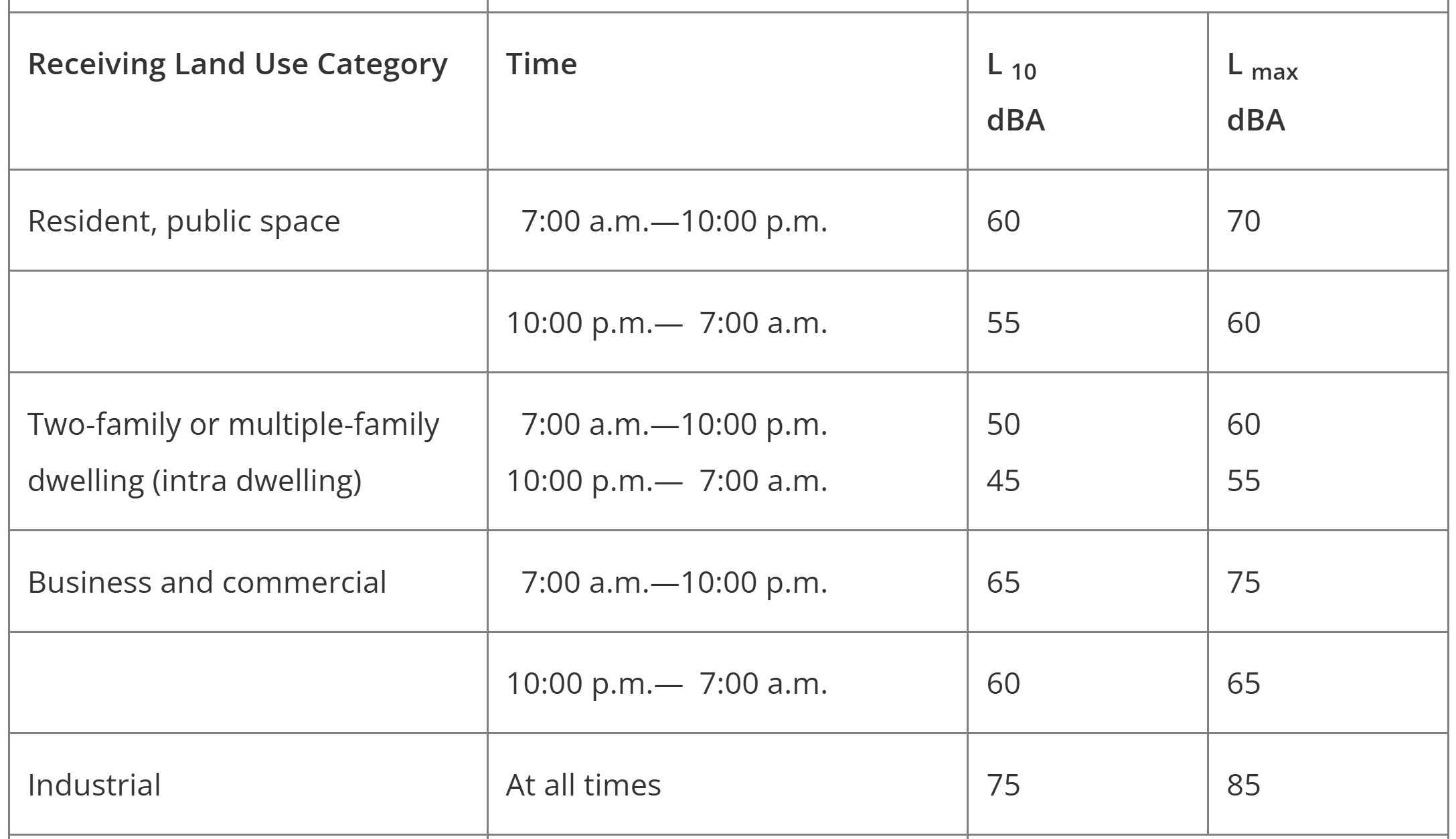
The Noise Ordinance lists permissible noise levels according to land use category
Special consideration is given to designated “Quite Zones” as well as historic neighborhoods known for their night life, notably in and around the Vieux Carré and Central Business District. Separately, the city’s Comprehensive Zoning Ordinance (CZO) describes a number of city-wide use standards—everything from amusement parks to stockyards—each with its own noise abatement requirements, buffer zones and hours of operation.
SETTING IS EVERYTHING
For residential neighborhoods and public spaces within Uptown New Orleans, such as Marlyville, sound levels should not exceed 60 db throughout the day, peaking up to 70 db for no more than a few minutes per hour. (Every 10-decibel increase is perceived as being twice as loud.) That’s the equivalent of two people, talking comfortably at a distance of about 3 to 5 feet, occasionally getting interrupted by a hair dryer or vacuum cleaner running in the same room.
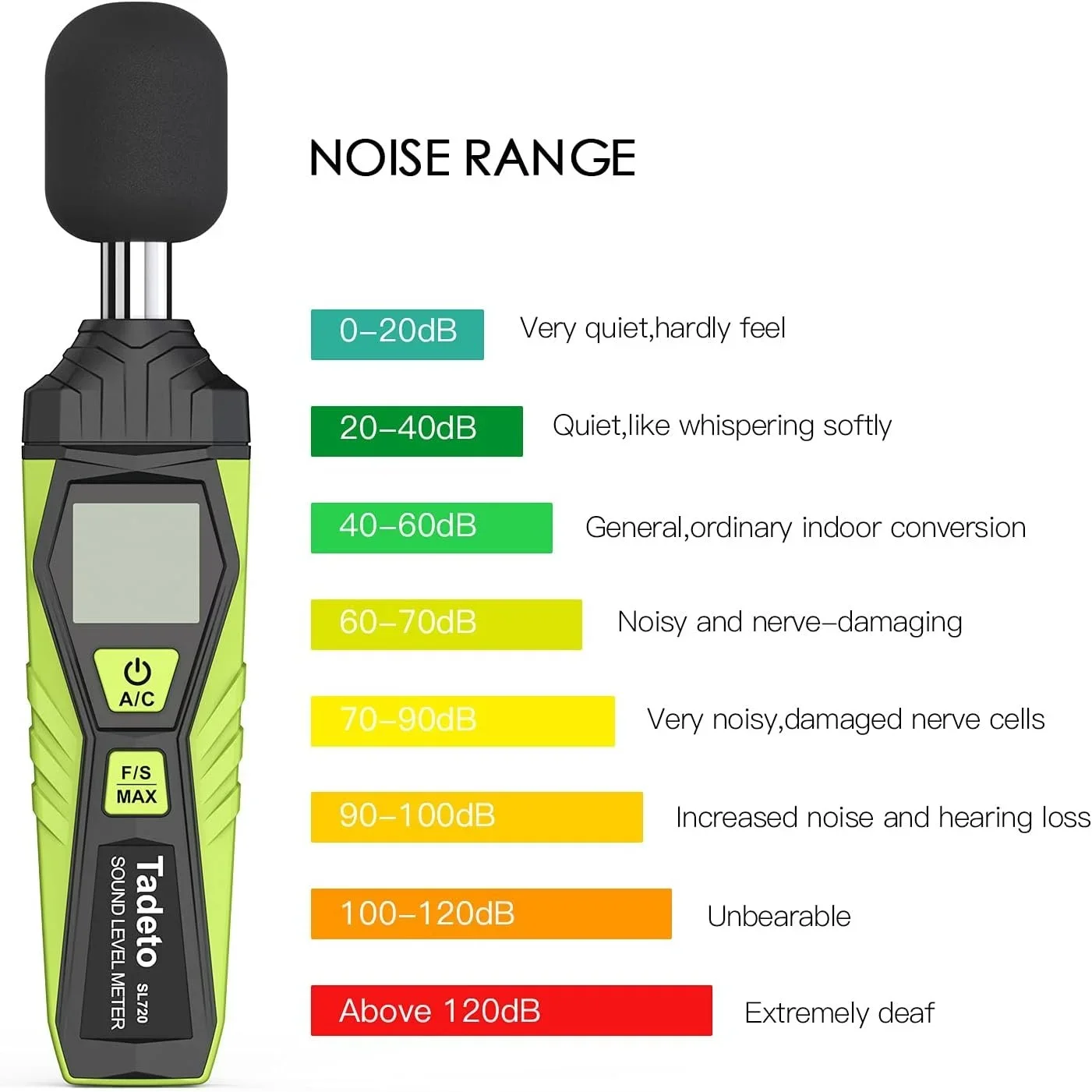
SOUND LEVELS EXPLAINED
A properly calibrated decibel meter, such as this professional handheld model, provides an objective measurement of environmental sound pressure levels over a wide range.
In places where music performances have become the norm—the active nightclub scene of the Marigny and French Quarter springs to mind—amplified sounds are capped more liberally at 80 db, as measured at the property line. On the other hand, non-amplified sounds, such as street performers, are limited to “10 decibels above ambient” rather than an absolute number. Noise Ordinance critics regularly characterize such moving targets as overly broad or unenforceable.
EXCEPTIONS AND EXEMPTIONS
Urban settings are inherently noisy. Accordingly, the Noise Ordinance exempts dozens of everyday activities: parades, lawn mowing, Jazz funerals, alarms and warning sirens, some religious/evangelical endeavors, special events or filming locations for which a permit has been granted, and so forth. The same goes for airports, churches, hospitals, heavy industry, mosquito control, and city-authorized public events like Mardi Gras, outdoor concerts or fireworks displays.
ENFORCEMENT, PENALTIES & APPEALS
Enforcement is largely complaint-driven and may be carried out by either the Health Department or the New Orleans Police Department, whose officers have the authority to order immediate abatement of the noise source.
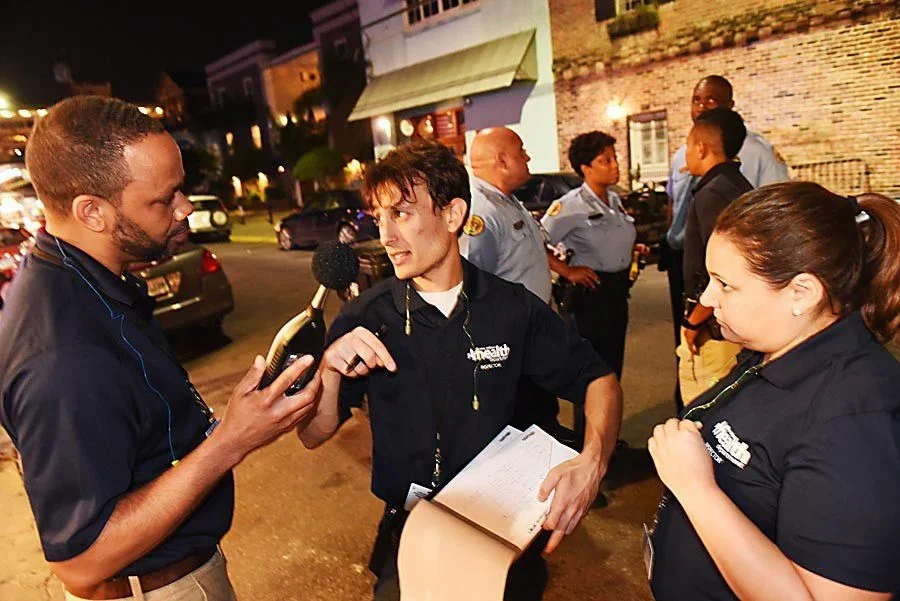
Sound Check inspectors from the New Orleans Health Department discuss the dangers of loud noise on Frenchmen Street
Whenever necessary, the city may initiate a review of variances and permits, as well as prosecute or enjoin repeat violators through restraining orders. City Hall also empowers Code Enforcement to issue warnings, levy citations, and, where necessary, seize amplification equipment.
Although the law mentions more severe potential penalties—such as imprisonment up to 90 days—in practice, noise violations are almost exclusively handled via civil citations or municipal fines. Separate misdemeanor offenses accrue for each day the violation was allowed to continue. In extreme cases, the offending place of business may be forced to close, with an option to appeal their case while long-term compliance strategies are worked out.
The ordinance also provides for neighborhood-level remedies including civil penalties, and injunctive relief in serious or repeated cases. When collecting evidence of excessive noise, details matter. Citizens are encouraged to carefully document sound levels and times of occurrence; otherwise, complaints may be challenged as being vague, capricious, retaliatory, or subjective in nature.
Aside from capturing source audio—or better still, recording a video—consider using a free sound measurement app on your smartphone to graph the average and peak sound pressure level (SPL) of the listening environment. This makes it far easier to export or share your findings directly with enforcement agencies or present the evidence in court.
REPORTING COMPLAINTS
Constituents with concerns about nuisance noise have several reporting options:
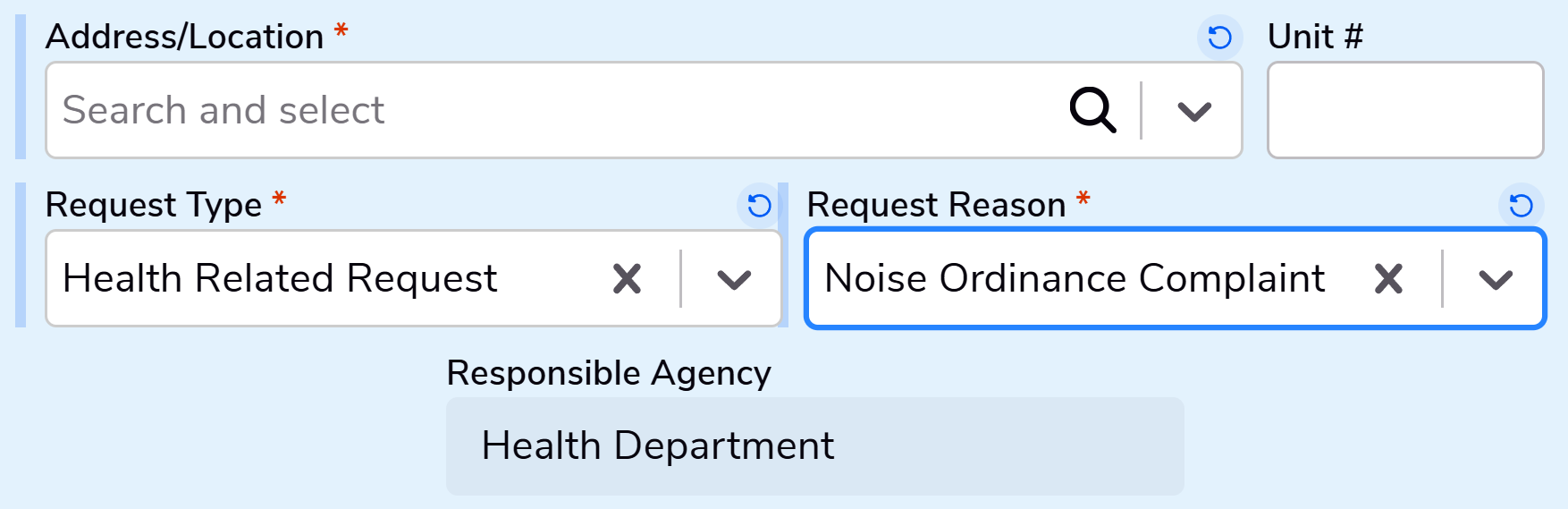
Sample noise complaint intake form at NOLA 311
NOLA 311 — dial 3-1-1 or complete the intake form at nola311.org
(select type ‘Health Related Request’ and reason ‘Noise Ordinance Complaint’)
NOPD — call the non-emergency dispatch line (504) 821-2222 to speak with an operator, or file a report online
Code Enforcement (for ongoing noise, such as fans, machinery or construction outside allowed hours) email CodeEnforcement@nola.gov or call (504) 658-5050
Railroad facilities — visit the NOPB Community Safety page for resources
Short-rerm rentals 24/7 hotline at (504) 788-2008 or fill out an online form
Tulane Athletics facilities — contact the Office of Government and Community Relations by email Tulane_OGCR@tulane.edu or call (504) 988-3390
NOTE: Anyone on or off campus may also use the Reporting Form on Tulane’s Neighborhood Resources page.
SUGGESTED READING
“Public sounds off on New Orleans noise ordinance” (WDSU-TV)
“Arguments over outdoor music in New Orleans could revive fight over noise ordinance“ (NOLA . com)
“Noise ordinance on the table, again” (OffBeat)
“Dave Woolworth presentations to French Quarter Management District” (YouTube)
“Guide to New Orleans Street Performance” (MaCCNO)
“City Council Changes Rules To End French Quarter Noise” (WDSU-TV)
“In the Birthplace of Jazz, Noise Complaints Get Louder” (Governing)
“Noise Ordinance Nonsense” (DrewWardNOLA)
“Arguments over outdoor music in New Orleans could revive fight over noise ordinance” (NOLA . com)
“Bourbon Street nightclub wins lawsuit over noise complaints” (NOLA . com)
“New Orleans' Noise Ordinance: What It Sounds Like Now” (WWNO 89.9 Radio)
