
The Life and Times of Pierre Marly (1793–1839)
Illustrious journey of a neighborhood namesake
PART III: Marly Marries and Seeks Fortune
Growing up, Pierre Marly had a front-row seat to his hometown’s continual transformation from colonial wilderness to structured urbanism. The bustling populace of New Orleans, eager to escape the confines of the French Quarter, spilled over into adjoining downriver settlements like Faubourg Marigny and the Bayou St. John area, where affordable plots and natural resources abounded. With limited practical access to the city’s backwater interiors or a river crossing to Algiers, planners turned their sights toward suburban plantations upstream. The fitful westward march of annexation into Jefferson Parish would soon commence.
-
1820s
Massive flooding from the crevasses of 1816 and 1822
Steamboat boom made N.O. the second-largest U.S. port and the wealthiest per capita
Gas lights introduced to French Quarter
First state-run Board of Health established to combat yellow fever epidemics
Population 27,200: 50% white, 23% free people of color, 27% enslaved
1830s
First railroad west of the Appalachians, the Pontchartrain RR opened access to Lake Pontchartrain and backswamp areas
Advent of the cotton press allowed shipping massive amounts of "White Gold" to European factories
Extensive dredging projects carved deep canals to promote drainage and lake commerce
Population 46,100: 46% white, 29% free people of color, 25% enslaved
1840s
Great Sauvé Crevasse prompts reinforcement of Upper Protection Levee above Carrollton
First industrial-scale attempts to drain the "Rear of the City" using steam power
Arrival of the telegraph meant global news reached New Orleans in seconds
Capital from Industrial Revolution favored the upriver side of the city, spurring further development
Population 102,200: 58% white, 19% free people of color, 23% enslaved
Marly’s journey through adulthood wended a similar path, driven by a desire to rise above societal limitations. Like his parents, Pierre et Marthonne, for whom passant à blanc culture was not a viable option, he had been deliberate in selecting a residence on the nearly all-White Rue Toulouse. The Marly family had always been fluent in the faire figure vernacular of the day, and accustomed to seizing whatever social mobility could be afforded them, but Pierre intended to stake an even greater claim for himself. Beyond legitimacy, he sought a legacy.
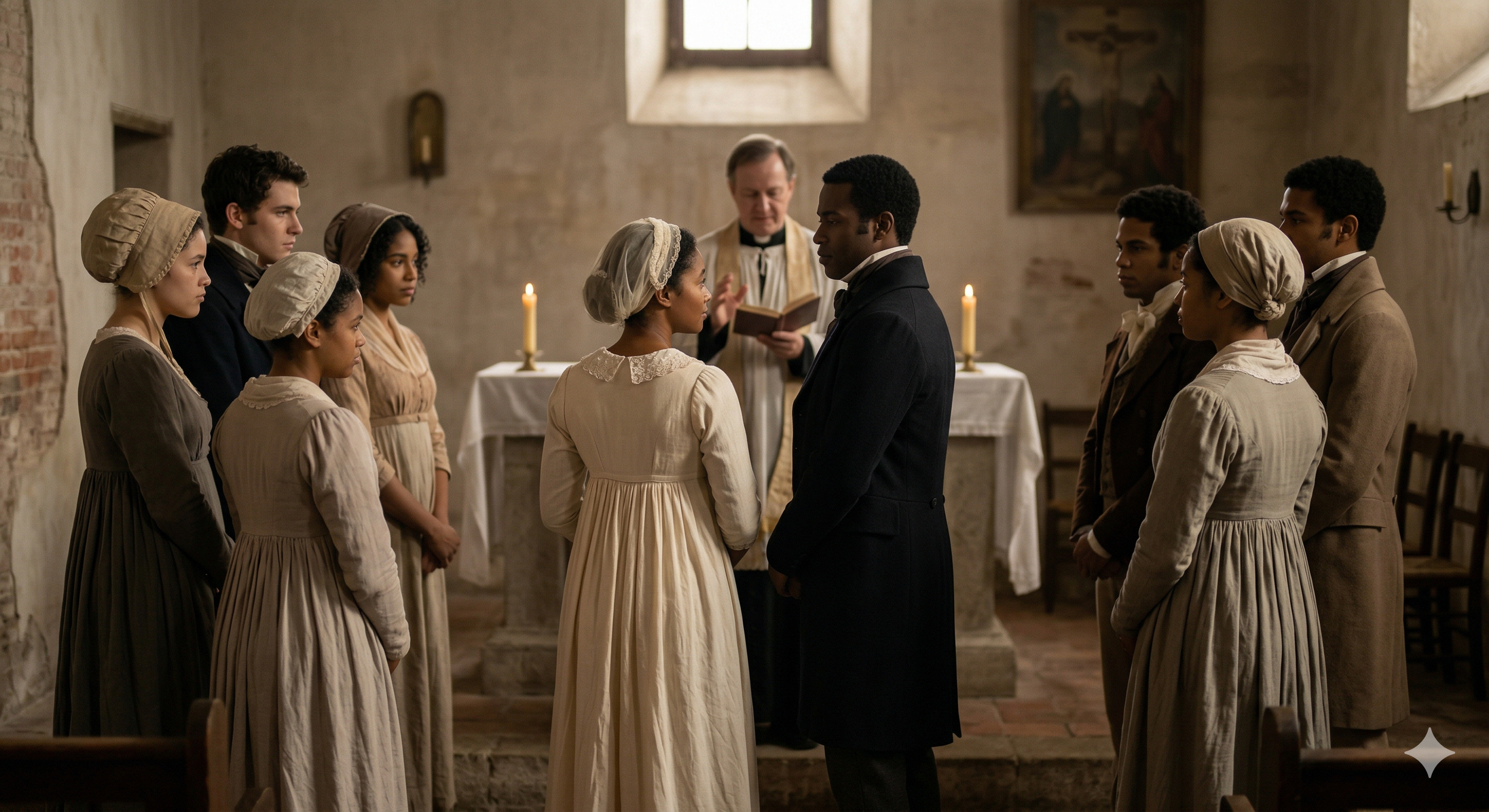
Wedding ceremony of Pierre Marly and Eleanore Villard, circa 1830
After leaving military service, establishing a prosperous career and achieving home ownership, his next logical aspiration was matrimony. Pierre’s youthful bride, Eleanore Villard—a Creole socialite eight years his junior, and reputedly a close relative of infamous privateer Pierre Laffite—proved the perfect companion with whom to share his bounty and begin building a family. The newlyweds were soon blessed with a daughter, Marie-Marthé, followed a couple of years later by two healthy sons, Pierre Louis et Jean Baptiste, naming them in the traditional manner after their paternal grandmother, grandfather and great-grandfather, respectively.
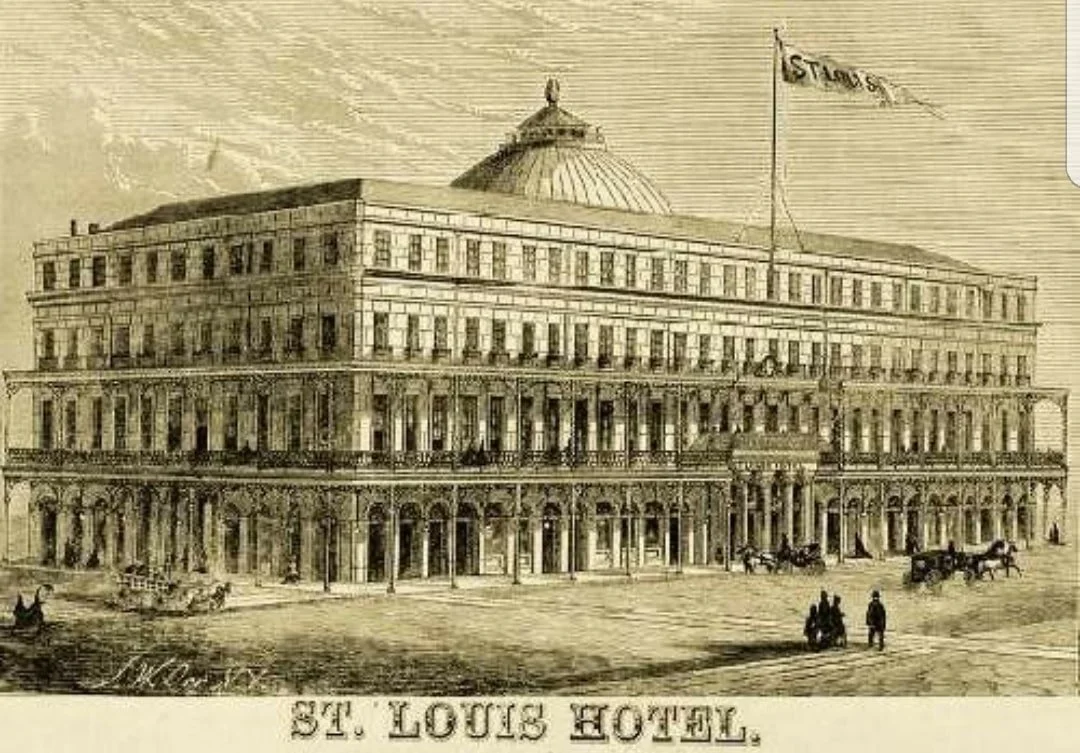
Exchange Hotel and Coffee House
For nearly a decade, Pierre Marly oversaw hotel and restaurant operations at this busy focal point of Creole business and culture.
By the mid-1830s, with heirship assured and a capable partner to manage household affairs, Pierre cast his attention almost exclusively to matters of business. He landed prized administrative positions at Maspero’s Exchange—a major social, political, and commercial hub where future president Lincoln once witnessed a slave auction—and Hewlett’s Hotel & Coffee House on the opposite corner of Rues Chartres et Saint Louis. There, surrounded by auctioneers, traders, and politicians, his deepening alliances with more established Creole merchants—typically older, more solvent and better-connected than he—proved a welcome advantage. As Marly’s entrepreneurial investment strategies steadily grew in scale and duration, he exercised ever more care and consideration so as not to put his family’s sizable nest egg at risk.
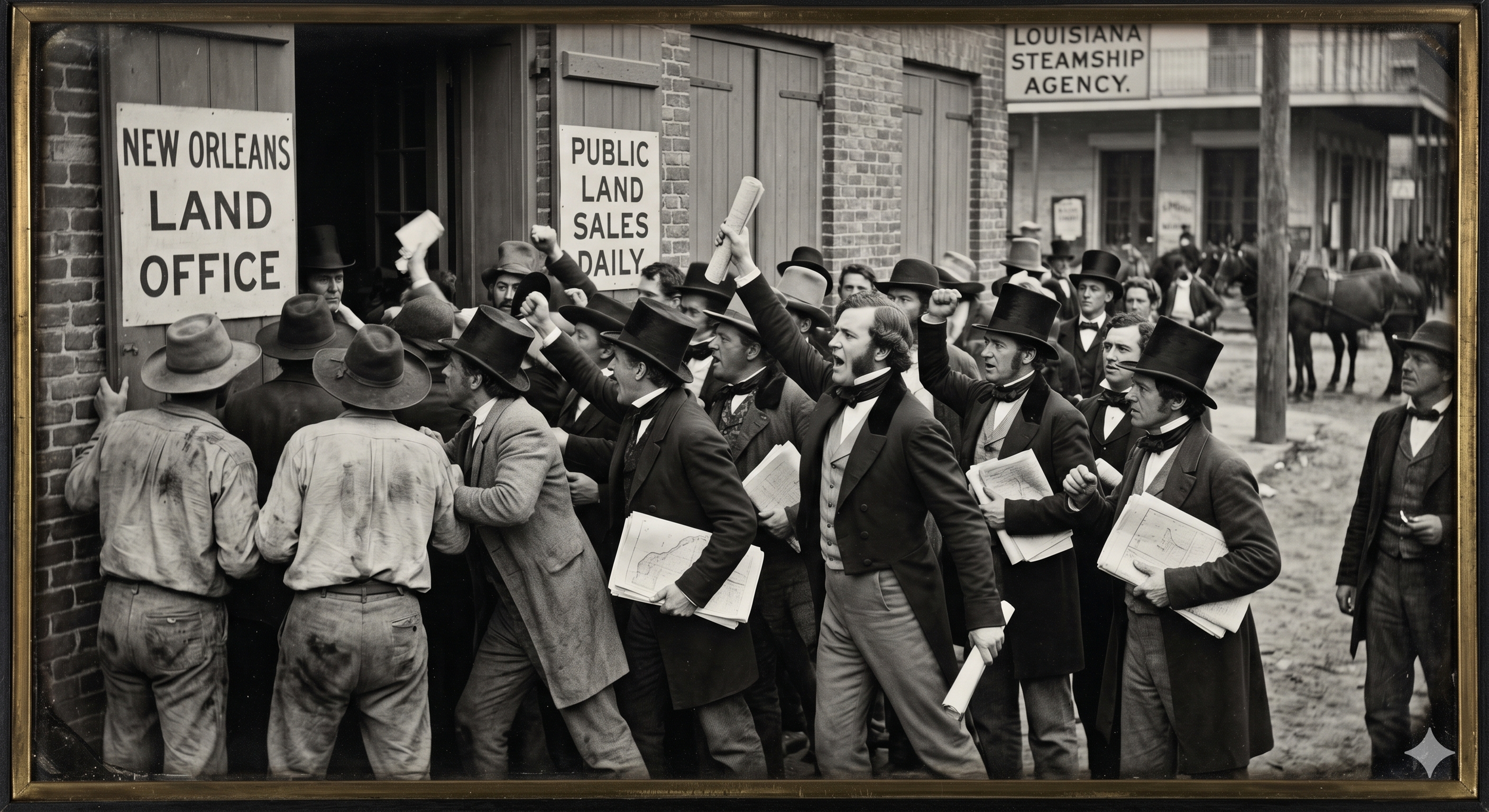
Speculators swarmed to New Orleans throughout the 1830s
For the doubling of New Orleans’ population in the decade since The War of 1812 included a contingent of shrewd bankers and industrialists looking to capitalize on the city’s astonishing growth. Savvy syndics swooped in, representing every major market from agriculture to textiles (where shipping volume skyrocketed as cotton presses came online) to the maritime industry (with steamships suddenly swarming every river and lake wharf). Marly regularly congratulated colleagues who had managed to stake their claims wherever the prospect of high returns took them. But he knew that of all the recent technological advancements, one stood out as having the most significant economic potential: Railroads.
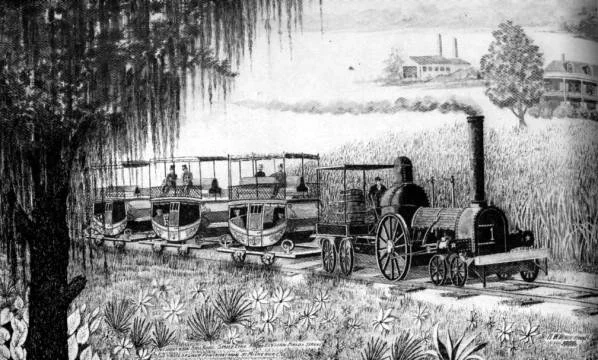
Pontchartrain Railroad (1831)
Running from Milneburg (shown here) at the lake, along Elysian Fields Avenue to the riverfront, Smokey Mary was the first locomotive west of the Alleghanies to be placed in service. Her tracks remained in place for over a century.
The 1830s rail revolution arrived in New Orleans with tremendous fanfare, quickly becoming a central cog in the local and regional economic engines, connecting all the major commercial sectors. Marly marveled when the first steam-powered short line, Pontchartrain Railway running along Elysian Fields Avenue, sprang up overnight mere blocks from his home, hauling people and supplies faster and with less effort than ever imagined. As longer hauls were announced, Pierre foresaw the vast infrastructure build-out they required, including terminals, docks, bridges, telegraph lines, depots, and of course, homes and hotels. News arrived daily of the railroad companies’ urgent quest to procure offices, housing stock, and rights-of-way to carry freight and passengers out of town, empowered by Congress and backed by seemingly infinite capital. Marly, sensing big profits ahead, wanted a piece of the action!
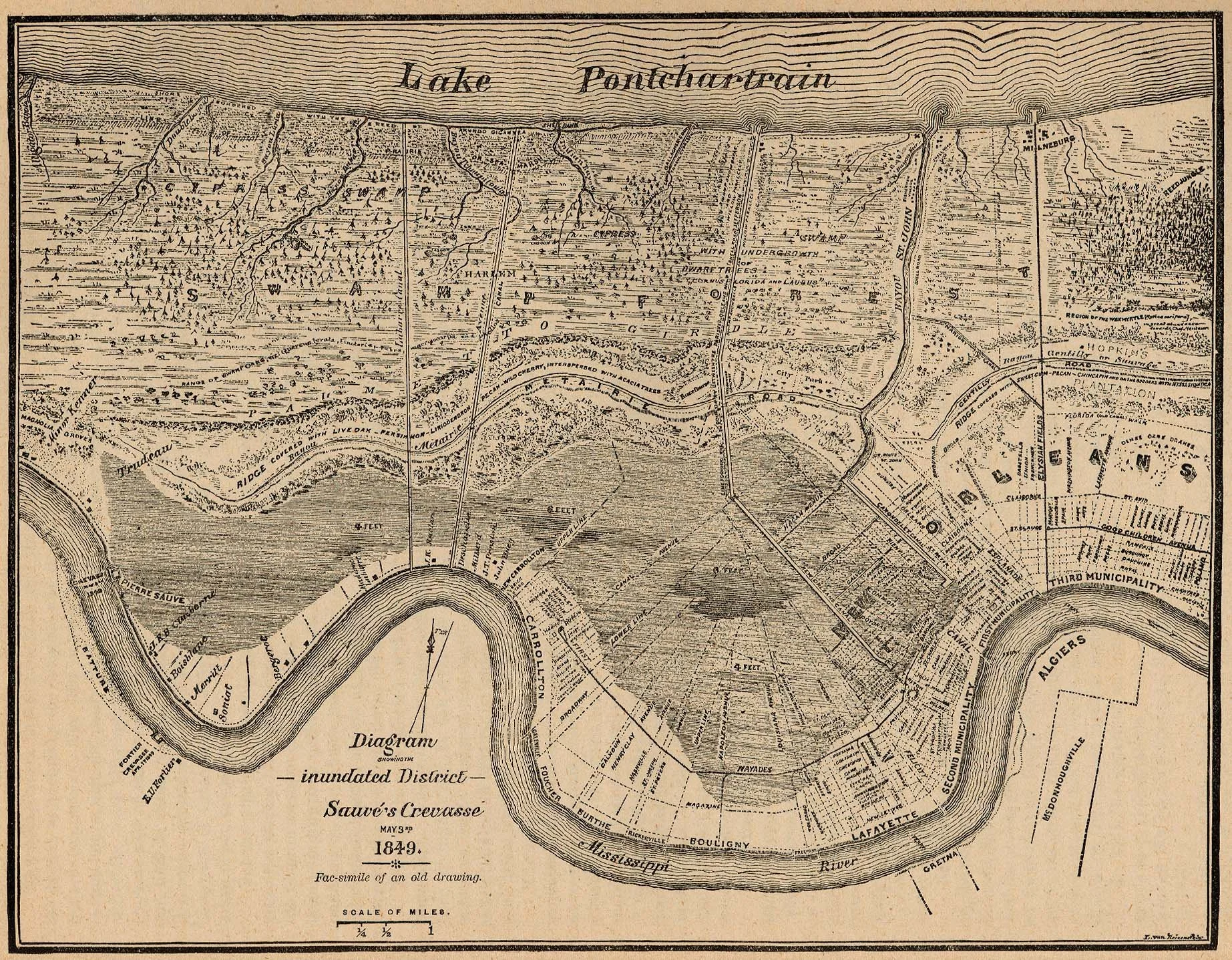
Extensive flooding caused by The Great Sauvé Crevasse of 1849
Marly, ever watchful for a suitable opportunity to arise, soon learned through his associates that a sizable tract of land was coming available on the outskirts of the suburban Town of Carrollton. Because this undeveloped parcel consisted of low-lying, marshy woodland that had flooded badly during recent river levee breaches, it was considered undesirable and thus being offered at a substantial discount. A casual investor might balk, thinking the virtually inaccessible land better suited to fishing, logging or possibly grazing cattle in dryer months.
But Pierre Marly knew better; on the strength of insider information conveyed by his trusty tipsters, he decided to pursue this diamond in the rough.
